
Summer reading rec: Transaction Denied by Rainey Reitman
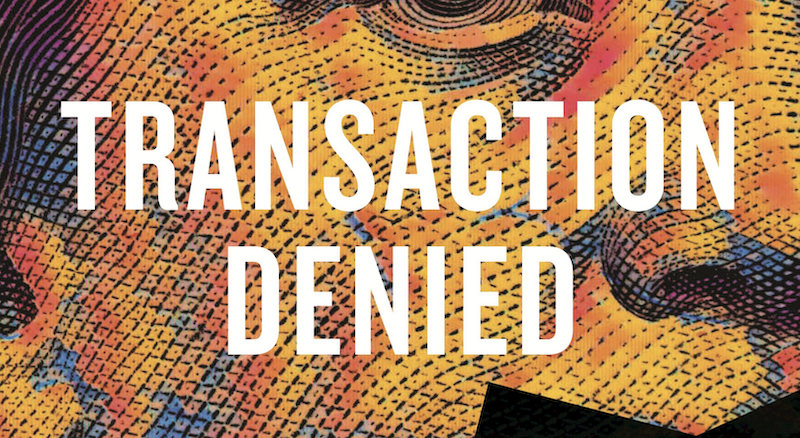
If you aren’t concerned about financial censorship yet, this book is a crash course on why you should be. If you are, here's the commiseration you've always wanted.
Authoritarian creep in the United States has a couple of characteristics—one of which is to do terrible things while dodging blame for them. The blame might fall on a different institution, like a corporation or a foreign regime, or it might fall on the victim themselves.
As our government continues barrelling toward oppression and censorship, one of the tactics we’re likely to see more often is debanking, aka financial censorship. In debanking, a person or organization sees their bank accounts, their PayPal, or their credit card frozen, with the funds unable to be accessed for any reason. Sometimes, they manage to regain access to those funds eventually. Other times, their life savings or the funds for a pivotal activist moment are lost forever.
The tactic of having a corporation like a bank or PayPal freeze finances allows a regime to deflect blame onto financial institutions by saying that the debanking was motivated by the financial institution’s policy, their risk aversion, or their morals. It also allows blame to be placed on the victim by characterizing them as a criminal or a terrorist without ever having to spend a moment in court. Financial censorship gives bad actors room to spread all of the talking points and do all of the life-ruining, without much recourse for their target.
If you want to understand this tactic, and how it’s been weaponized for years against activists, whistleblowers, sex workers, and more, you’ve got to read Transaction Denied by Rainey Reitman.
Financial censorship has been one of the quietest but largest issues in the background during my time at Fight for the Future. The potential to combat it is a big part of why we always paid attention to crypto and alternative financial systems. Frankly, we don’t think banks or their pearl-clutching shareholders or the governments pressuring them should be able to choose who gets to own the money that they’ve earned.
Yet, they do. And unfortunately, financial institutions are just as likely to debank someone for their own internal reasons as they are to do it under pressure from the government.
Many in the movement against the genocide in Gaza were shocked to hear how US sanctions have forced people like UN Special Rapporteur on the Occupied Palestinian Territories Francesca Albanese into a “civil death” that has blocked her from holding a bank account. We weren’t, because of the lived experiences of everyone from sex workers to Chelsea Manning’s defenders (of which Reitman is one, she writes about it in the opening of her book). Debanking, whether it comes from a sanction, or from a wink to a payment processor seeking political favor, or from an influential shareholder who thinks trans healthcare is immoral, is a damn good weapon against dissent and people of marginalized identities.
Transaction Denied follows the threads of this issue through our current moment, with intelligent interviews and powerful perspective that come from Reitman’s extensive work in activism and consumer rights. If you’ve never had a good think about the weaponization of our financial system (or you want to commiserate), put this book on your summer reading list now.
While Transaction Denied is available broadly, we recommend you order it from your local indie bookstore or via bookshop.org
Member discussion