
Our 2026 bingo card for digital human rights
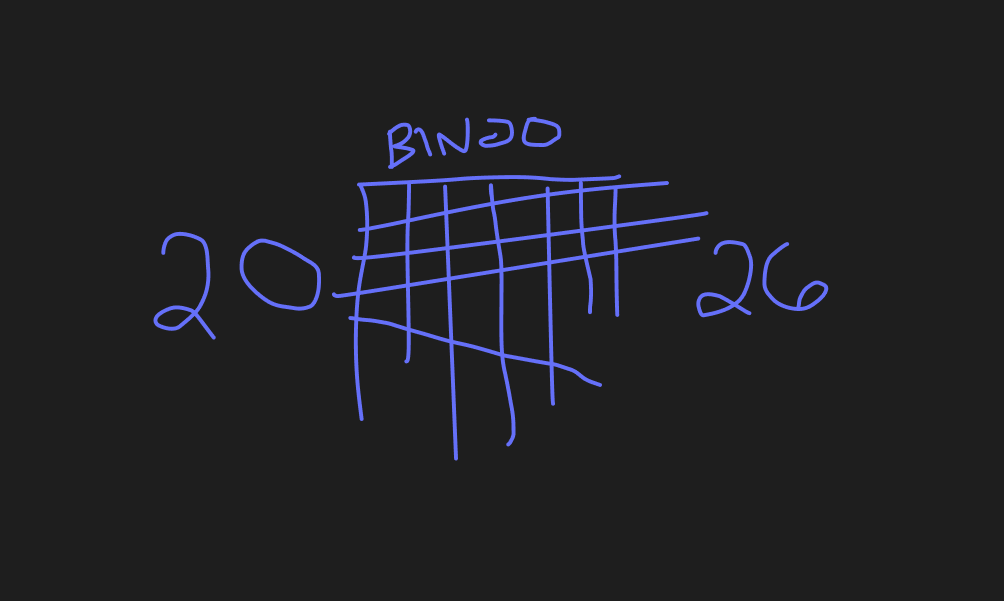
Bear with us, we’re going to try and make forecasting about digital rights in the year of 2026 fun. That starts with our 2026 page, where we recap last year and lay out some of our big campaign targets on the horizon. You can check that out here.
In the harsh grey light of January, we are laser-focused on looking forward. While prioritizing our work, learnings, and relationships, we figured we’d play some bingo. The 2026 Internet will certainly offer many bingo-worthy happenings, so here are three of the biggest categories we’re accounting for as we begin another year in the trenches for digital human rights and a better Internet.
Digital ID check laws as a path to censorship and surveillance.
By now we’re all familiar with the state-level ID check laws that are creating a patchwork of censorship and surveillance for everyday Internet users across the US. In some of these states, you can’t access social media without verifying your identity by providing sensitive personal info like a drivers license or biometric data like a scan of your face. This is being done in the name of protecting children, when in reality it makes the Internet less safe for everyone—especially kids.
Over the holidays, a judge in Texas blocked an app-store level ID check law, writing that the law: “is akin to a law that would require every bookstore to verify the age of every customer at the door and, for minors, require parental consent before the child or teen could enter and again when they try to purchase a book.”
Despite this judge’s valid first amendment concerns, ID check bills are taking up a lot of energy in DC. (Energy that might be better spent on real digital privacy protections for everyone.) There are both federal bills that explicitly require ID checks like the SCREEN Act and also bills like KOSA that would require ID checks in order to be implemented, but never demand ID checks by name.
So, here’s what’s on our bingo card:
- More ID check laws are going to face legal challenges on first amendment grounds.
- More tech titans endorsing and advocating for ID check laws, which would allow them to collect even more data on all of us, including kids.
- More federal hearings on ID check laws that distastefully weaponize the grief of parents for the benefit of Big Tech.
- Total refusal of the majority of ID check proponents to recognize that their laws are both ineffective and unpopular.
- More laws aimed at banning VPNs, which are how people are circumventing invasive ID check regimes and accessing websites that are forced to block users due to poor state-level legislation.
- Even more everyday people are going to recognize that these laws don’t work and spew hellfire about KOSA and its ilk.
- When her term ends, Marsha Blackburn is going to be caught on a hot mic saying “thank god I don’t have to try and pass KOSA anymore.”
- More data breaches (like we’ve already seen) where data collected to verify identities is exposed
Rising bluster on repealing Section 230, the Internet’s first amendment.
In the interest of appearing tough on their Big Tech donors, Senators like Dick Durbin and Lindsay Graham will continue to grandstand about a repeal of Section 230 and champion embarrassingly half-baked legislation.
The latest out of these guys’ malfunctioning easy-bake oven oozed and smoked its way onto the legislative playing field in mid-December. This proposal would sunset the law completely and give tech billionaires and culture war lawfare organizations like the Heritage Foundation and National Right to Life a straightforward path to censor and intimidate anyone and everything they don’t personally like online.
The targets, should we lose Section 230, would likely start with LGBTQ+ people and content, abortion content and activists, and any activist, journalist, or movement that pursues accountability from public figures.
For the bingo card:
- Repealing Section 230 will continue to be injected into the legislative agenda by lawmakers who are at this point willfully ignoring how the Internet actually works.
- More tech billionaires and their companies will endorse 230 changes because they would give the biggest players more power. Power that would be realized with compliance weaponized against public discourse and through regulatory capture.
- More outraged op-eds and skeets for 230 repeal from tech accountability activists who haven’t listened to marginalized communities. (And sadly, more comments on our socials to the same effect.)
- Legislators owned by Big Tech will float 230 a reform bill as a “solution” to terrible things happening online, but really their proposal would just makes it impossible for smaller competitors like Bluesky to exist while throwing users under the bus.
- Indivisible, 50501, and No Kings are going to amp up their organizing against online censorship laws that threaten their movements, like 230 repeal—and we’re going to get a biting direct action outside the offices of Dem cosponsors.
- Senator Dick Durbin is going to retire and some other Dem is going to look at the flaming garbage pile of wasted effort that is his legacy re:230 and think “I want to be just like Dick!”
Literally everything is spying on us and our leaders haven’t cared. That’s gonna change.
Perhaps the most punk rock thing that happened at Fight for the Future in 2025 also came in December. (Really, December was an encapsulation of the whole damn year while all of us just wanted some digital detox and oat nog.) tl;dr after months of protest the Oakland City Council bypassed public participation laws and passed an expanded contract with Flock, the totally insecure license plate reader company that fakes its crime metrics. As our Senior Campaign Director Reem Suleiman and her collaborators testified and called out the city council’s shady practices,some clown a pro-Flock city Councilmember actually flipped the speakers off and refuses to apologize.
So. That’s how legislators in Oakland are dealing with activists seeking accountability for tech that feeds data directly into the surveillance and enforcement system that ICE got $27.7 billion dollars to build. Regardless of their interest in accountability, this is going to be a year of reckoning for all the Flocks and and all their supporters and their corporate partners like Amazon’s Ring doorbells, too. Community movements against ICE are only gaining momentum, and we’re going to see a lot of Big Sad from the pro-surveillance community when it comes to Consequences for public infrastructure betraying immigrant communities and activists.
More, the Big Sad’s not going to stop with the cameras. A groundswell of concern is growing among security-minded people about AI agents. Here’s what we know about AI agents: they have to have access to everything about us and store all that data to work; they are notorious for being exploitable, ignoring rules, and generally not maintaining (or ever having) alignment with the interests of humans; and, every AI company out there is more or less bending over backwards to keep the Trump-nozzle of funding and deregulation spurting. Signal’s worried. The ACLU’s worried. Anybody who wants a private digital life should be worried.
And the bingo nominees are:
- National security experts are going to get their heads out of the sand on things like Flock and agentic AI. Just as the FBI came around to recommend end-to-end encrypted messaging apps like Signal, they’re going to recognize that if they can infiltrate, so can everybody else.
- North Korea or another fun one hacks Flock (or is already in there.)
- Flock’s CEO is starting to crack. He’s going to get weird and maybe more publicly desperate.
- Oakland and San Francisco are not going to fare well in their respective lawsuits over their Flock contracts.
- Direct action against physical surveillance infrastructure is going to become more common.
- Cities and states are going to prioritize anti-surveillance and privacy legislation—or at least better guidelines for surveillance tech vendors.
- AI data or agentic AI weaponized directly against immigrants or dissent by the Trump admin.
- The AI privacy movement is going to rise.
In summary, we are going to need a fair amount of beverages, pastries, and CBD bath bombs in 2026.
If you can, commit to paying for one of those a month by signing up to be a monthly donor at fightforthefuture.org/donate — or, just keep the love and engagement going on our socials and other channels. Despite it all, let’s have some fun this year, shall we?
Member discussion